Effective procurement means meeting the right need at the right time, at a reasonable total cost, with vendors delivering on their commitments.
As businesses grow, purchasing requests, vendor relationships and documents become harder to coordinate. Information scattered across emails, spreadsheets and departments creates repetitive work, slows approvals and limits visibility.
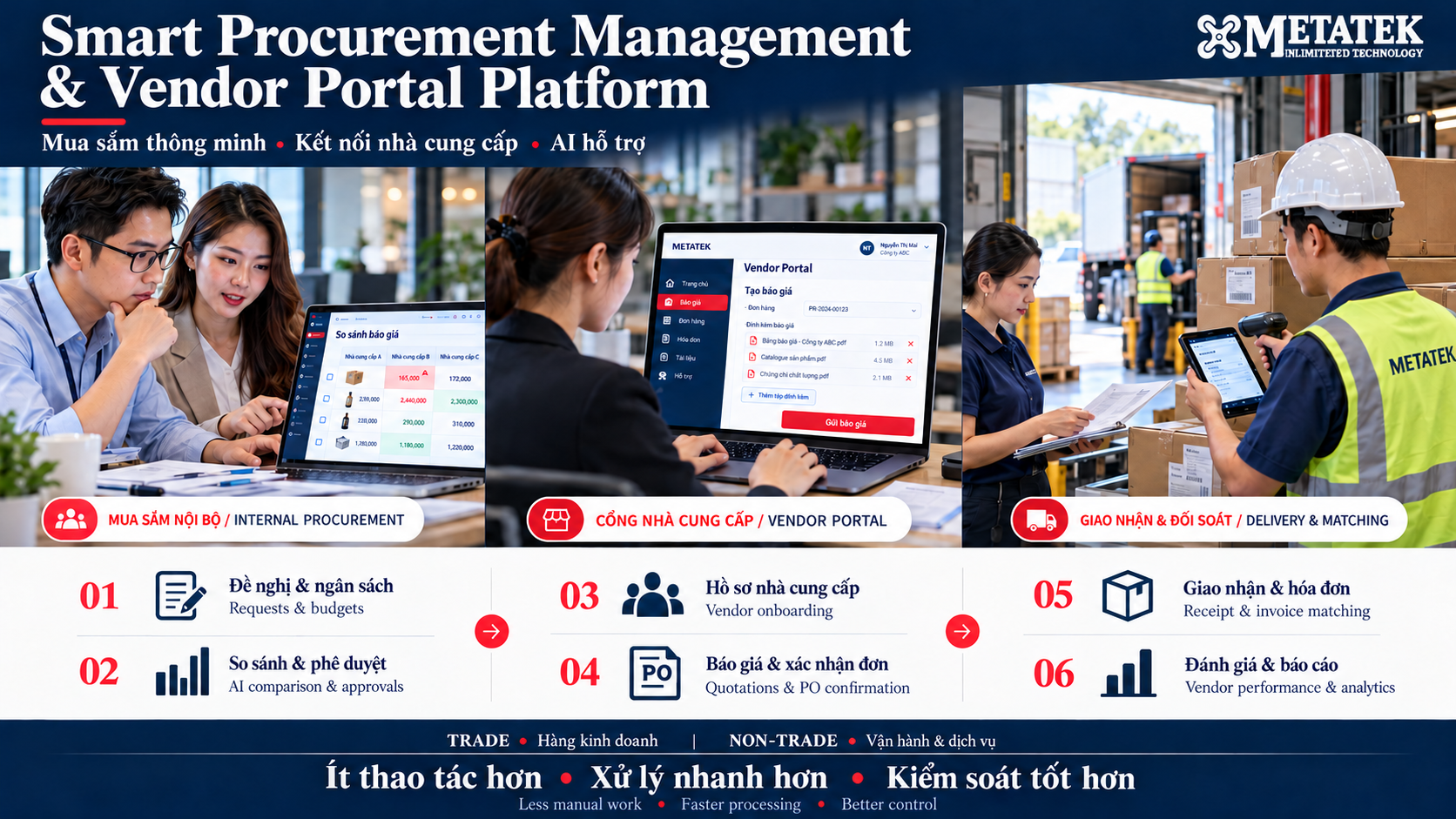
Smart Procurement Management & Vendor Portal Platform connects internal purchasing with vendor collaboration. AI helps users process information, reduce manual effort and make better-informed decisions.
Where businesses face friction
- Incomplete requests: specifications, budgets or required delivery dates need clarification.
- Inconsistent quotations: prices cover different units, scope, delivery, warranties or payment terms.
- Fragmented vendor records: capabilities, contracts and performance history are difficult to verify.
- Disconnected coordination: procurement, warehouse teams, finance and vendors work with inconsistent information.
- Limited performance feedback: delivery delays, quality issues and document errors do not consistently inform future purchasing.
One platform, six connected capabilities
1. Vendor onboarding and lifecycle management
The Vendor Portal centralizes registration, legal documents, capabilities, categories, certifications and contracts. Vendors update their records through controlled access, while the business tracks review status and document expiry.
AI assists with document extraction, capability summaries and missing-information checks.
2. Guided purchase requests
Users describe their needs or select standardized catalog items. AI helps populate forms, clarify specifications and identify missing details.
The platform supports both trade procurement and non-trade purchasing, including equipment, consumables, software and services. Integration enables checks against budgets, inventory and existing contracts.
3. RFQ management and quotation comparison
Vendors receive requests and submit quotations through the portal. AI helps extract information, prepare comparisons and highlight differences in price, specifications, delivery, warranties and payment terms.
Buyers assess total cost on a consistent basis and verify unclear information before selection.
4. Efficient approvals and clear accountability
Requests follow defined budgets, approval limits and access rights. AI summarizes the business need, proposed selection and exceptions requiring attention.
Approvers work through web or mobile interfaces, requesters track progress, and decision histories remain available for review.
5. Purchase order, delivery and invoice coordination
Vendors confirm purchase orders, update delivery schedules and submit documents through the portal. Procurement, warehouse teams and finance share visibility into progress.
The platform supports matching purchase orders, goods receipts or service acceptance, and invoices. AI helps flag discrepancies so teams can focus on exceptions.
6. Procurement analytics and vendor performance
Dashboards consolidate spending, pending approvals, order progress and vendor performance.
Delivery reliability, quality, responsiveness and document accuracy support periodic reviews. AI helps identify recurring issues, purchasing consolidation opportunities and information useful for negotiations.
Metatek’s recommended approach
Standardize: align categories, vendor records, evaluation criteria, access rights and purchasing workflows.
Start with a focused scope:select processes with substantial manual effort, connect existing ERP, inventory and accounting systems, and apply AI to document review, quotation comparison and discrepancy checks. Authorized users retain purchasing and approval decisions.
Measure and expand:track request-to-order time, comparison effort, incomplete submissions, on-time delivery and invoice discrepancies.
Value for every participant
- Employees:easier requests, less repeated entry and clear progress.
- Procurement teams: less administration and more time for negotiation and vendor development.
- Vendors: clearer requirements, easier updates and consistent collaboration.
- Leadership:stronger visibility into spending, vendor performance and operational risks.